

14 Aug Designing Safety Programs for High-Frequency Delivery Fleets

A delivery driver making 60 stops a day works a completely different job than a driver running one long haul. More stops mean more curbs, more backing, more open doors, and more chances for something to go wrong. Generic safety programs were never designed for that pace.
Delivery fleet safety means keeping drivers, vehicles, and the public safe while making multiple quick deliveries. In high-frequency delivery, the urgency to meet tight schedules can conflict with the need for safety, making standard fleet safety programs ineffective.
A high-frequency operation needs a safety design tailored to its own realities: short trips, constant stops, and drivers who cannot afford hours of classroom training. Let us guide you in building one.
High-Frequency Fleet Risk: Why Traditional Safety Models Fail Last-Mile Operations
Most fleet safety programs assume long, steady drives on open highways. Last-mile delivery breaks that assumption completely. A driver weaving through city traffic, double-parking, and jumping in and out of the cab all day faces hazards a highway-focused program never accounts for.
The numbers show the strain. The National Safety Council reports that roadway incidents are the leading cause of work-related death, with 1,252 workers killed on the road in 2023. Delivery drivers spend their whole
shift in exactly that environment, and high-frequency fleet risk grows with every added stop, since each stop is a fresh chance for a curb-side collision, a backing incident, or a distracted moment.
Generic programs also lean on advice that feels disconnected from the job. Telling a delivery driver to leave more following distance does little when the real danger is a pedestrian stepping out between parked vans.
Highway-style rules assume steady speeds and predictable traffic. A delivery route delivers the opposite: constant braking, tight turns, and split-second decisions at every address. A program tailored to the route’s real conditions is what moves the needle on last-mile safety.
Managing the “Micro-Risks” of High-Frequency Stop Cycles
Micro-risks are the small, recurring hazards that accompany every stop. Each one looks minor on its own. Multiplied across dozens of stops a day and thousands a month, they become the leading source of delivery incidents.
Four micro-risks show up again and again:

- Curbside stops, where drivers pull into live traffic and open doors toward passing cyclists or cars
- Backing and reversing, which put drivers in tight spaces with poor visibility and blind spots directly behind the vehicle
- Door-zone collisions, where an opening door meets a passing vehicle or bike
- Pedestrian interaction zones, where drivers cross busy sidewalks while carrying packages
The real danger is repetition. A maneuver that stays safe 99% of the time still fails when a driver repeats it fifty times a day.
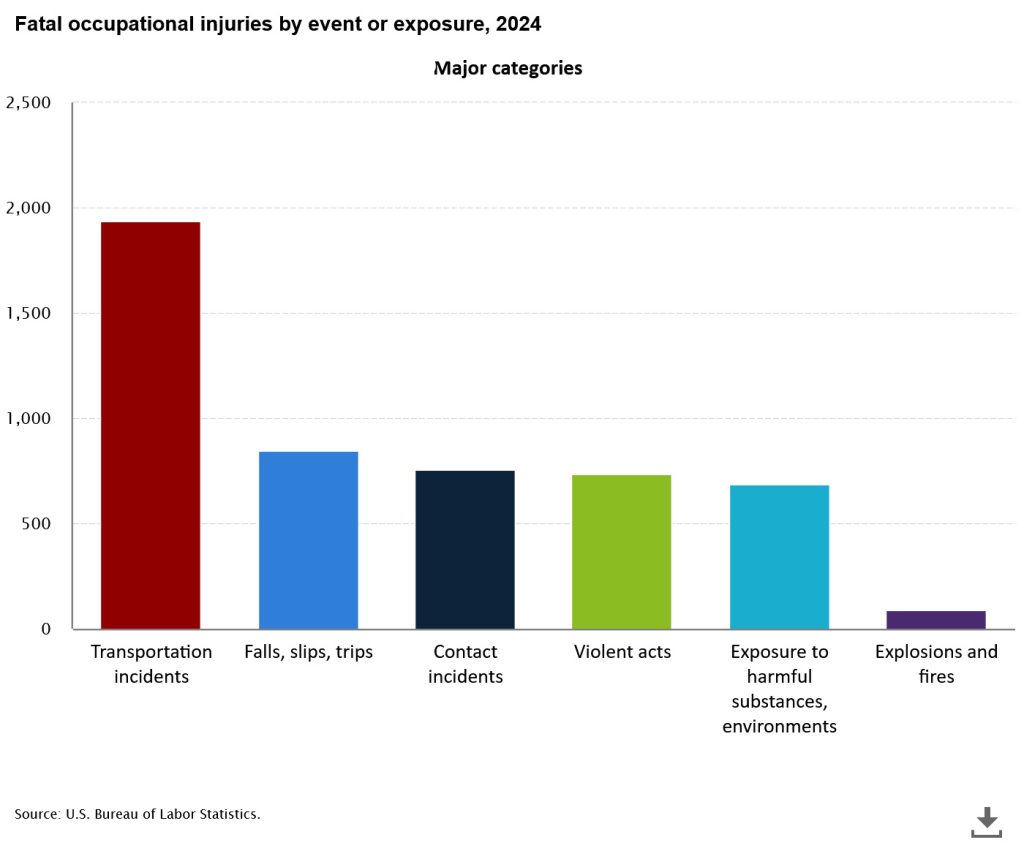
Strong last-mile delivery safety treats these routine moments as the highest-priority risks, because they cause far more incidents than the rare highway crash. The Bureau of Labor Statistics reports that transportation incidents were the most frequent type of fatal workplace event in 2024, accounting for 38.2% of all occupational fatalities, which makes disciplined stop-cycle habits a core safety investment rather than a box to check.
Driver Fatigue Management: Proactive Solutions for Last-Mile Logistics
Fatigue builds fast in delivery work. It comes from constant physical and mental load: in and out of the cab, lifting packages, scanning for addresses, and racing the clock all shift. The mental toll adds up quickly.
The safety stakes are serious. The National Safety Council reports that going more than 20 hours without sleep impairs a driver as much as a blood-alcohol level of 0.08%, the legal limit. The National Highway Traffic Safety Administration estimates that drowsy driving caused about 91,000 crashes in 2017, resulting in an estimated 50,000 injuries and nearly 800 deaths. These data show that a tired driver making split-second decisions at every stop is a serious liability.
Effective driver fatigue management focuses on the parts of the operation a fleet can actually control:
- Route density, so drivers are not pushed past a reasonable stop count per hour
- Shift length, planned to keep total time behind the wheel within safe limits
- Stop clustering, which cuts unnecessary driving and eases mental fatigue between deliveries
Fatigue data is the key. When a fleet tracks hours, stop counts, and incident timing together, patterns emerge that show exactly when risk climbs. Scheduling around those patterns reduces the likelihood of an incident before a crash occurs.
Proactive Coaching: Turning Telematics Into Short-Burst Training
High-frequency drivers cannot spend hours in a classroom. Every hour off the road is a route not run, so coaching has to fit into the workday’s flow.
Telematics makes that possible. It turns everyday driving data into targeted, bite-sized lessons. When a system flags hard braking, sharp cornering, or a rolled stop sign, a fleet can send a short, focused prompt the same day while the moment is still fresh in the driver’s mind.
Effective delivery driver coaching in this model rests on a few habits:
 Short, frequent feedback that takes minutes, not hours
- In-the-moment correction tied to a real event, the driver remembers
- Positive reinforcement when the data shows improvement, so coaching feels supportive
 Short, frequent feedback that takes minutes, not hours
Micro-coaching keeps drivers on the road while steadily improving behavior. A two-minute nudge right after a hard-braking event lands while the memory is fresh, changing habits with almost no downtime. Across a full team, those small corrections add up to measurably safer routes.
High-Frequency Delivery Telematics Coaching Protocols vs. Traditional Classroom Fleet Safety Training
A direct comparison shows why telematics-based coaching fits high-frequency work well. The table below weighs both approaches against the realities of a delivery operation.
| Evaluation Criteria | High-Frequency Delivery Telematics Coaching Protocols | Traditional Classroom Fleet Safety Training |
|---|---|---|
| Driver Time Constraints | Minutes per session, delivered between or after routes | Hours per session, pulling drivers off the road for a full block |
| Behavior Modification Rates | Higher, feedback ties to a specific event the driver just experienced | Lower, lessons stay general and often fade by the next shift |
| Overall Implementation Friction | Low, prompts delivered through device drivers are already carried | High, needs scheduling, venues, and lost delivery hours |
For a high-frequency fleet, strong delivery fleet safety depends on coaching that fits the route rather than fighting it. Telematics-based protocols keep drivers earning while they learn, which is why more delivery operations are moving toward them.
The Fleet Response Moat: Safety Integration for High-Volume Cycles
Fleet Response provides high-volume operations with a single system where safety, claims, and risk data work together. Fragmented tools leave gaps between departments. Pulling everything into one connected platform keeps a fast-moving fleet in control.
The approach works at the system level:
- Data collection that captures incidents, telematics events, and driver behavior in one place
- Incident tracking that ties every event to the driver, route, and vehicle involved
- Behavior analysis that turns raw data into clear coaching priorities
The real advantage is the feedback loop. A driver flagged for repeated backing events receives targeted coaching—the safety team tracks whether the behavior improves, and the claims side benefits from fewer incidents. Operations and safety working from the same data is what keeps that cycle turning.
For high-frequency fleets, safety integration turns scattered reports into a steady, measurable performance gain. Fleet Response connects that loop from incident to coaching to claim, so every delivery cycle feeds the next round of improvement.
Frequently Asked Questions
1. How do high-frequency delivery fleets measure safety performance beyond accident rates?
Top fleets focus on predicting risk instead of just counting accidents. The measures that reveal risk before a crash happen include:
- Hard-braking frequency
- Speeding events
- Stop-cycle incidents
- Coaching completion rates
By tracking these trends, a fleet can see whether safety is improving, even during a stretch with no reported accidents.
2. What technologies are most effective for monitoring last-mile driver risk in real time?
Telematics and in-cab sensors are powerful tools for monitoring driver behavior in real time. They can track harsh braking, rapid acceleration, hard cornering, and speeding in real time. This allows safety teams to identify high-risk drivers the same day. When combined with GPS and route data, these systems give safety teams a live view of where risks are increasing.
3. How can fleets reduce accidents without slowing down delivery speed?
Short, telematics-based coaching corrects risky habits without pulling drivers off their routes. Smarter route design and realistic stop counts also reduce the rushing that causes most incidents, so deliveries stay on time and drivers stay safer.
4. What are the early warning signs of fatigue in delivery drivers?
Fatigue often affects a driver’s actions before it leads to a crash. Common early signs of fatigue include:
- Slower reaction times
- Drifting within a lane
- Missed stops
- Frequent yawning
- Rising hard-braking events late in a shift
Telematics can automatically identify patterns in driving behavior. For example, a driver who becomes more erratic throughout the day may be showing signs of fatigue, even before an incident occurs.
5. How do coaching programs stay effective when drivers are constantly on the road?
Coaching is most effective when it’s short, frequent, and connected to real events. A quick reminder right after an incident is more impactful than a long yearly session, and it keeps drivers engaged. Regular support over time helps build lasting habits without taking away delivery hours.
Scaling Safety Alongside Delivery Speed
Speed and safety aren’t opposites. In a well-run delivery operation, they work together. Fewer incidents mean fewer disruptions, lower costs, and less downtime. A strong program lets a fleet move faster with confidence. Safety, done right, is what makes high-volume delivery sustainable.
Strong delivery fleet safety scales with the operation instead of holding it back. Growth and safety climb together when the program is designed for the pace of the work.
Fleet Response helps high-frequency fleets build that kind of program by combining safety, claims, and risk data into a single system designed for high-volume cycles. Contact us to explore how we can support your operation and design a safety program that scales with your delivery volume.