

05 May Predictive Analytics in Fleet Safety: Identifying High-Risk Drivers Before an Accident
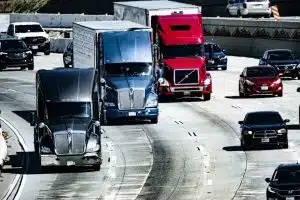
Despite substantial progress in reducing daily collisions, road safety remains a pressing challenge not just for motorists and pedestrians, but also for fleet companies. Given that risky driving behavior is a major contributor to vehicular accidents, traditional, reactive safety approaches won’t be a sufficient solution.
Predictive fleet safety analytics changes the game. Instead of waiting for accidents to happen, it helps you spot dangerous driving behaviors early, so you can take action before they escalate into costly incidents.
Once you see how it works, it becomes much easier to switch from a reactive mindset to a proactive safety approach.
The Reactive Fleet’s Hidden Cost
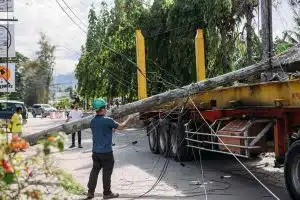
Reactive safety measures have long been used in fleet operations to address problems as they arise. But as the fleet grows larger, this system is a risk issue that impacts safety, disrupts service reliability, and eats into your profitability.
According to the Federal Motor Carrier Safety Administration (FMCSA), one accident will cost your company anywhere from $148,279 for an average collision to $7,200,310 for a fatal collision.
While reactive measures leave dollars in your pocket today, the numbers make it clear that saving those dollars will cost you more later.
What Predictive Analytics Actually Means in a Fleet Context
Predictive analytics is a game-changer in identifying high-risk drivers. Through a forward-looking approach, this program uses sensor data, statistical algorithms, and machine learning to identify risky driving behaviors and patterns, helping you anticipate future incidents before they occur and recommend safer driving practices.
From Reactive to Proactive: A Fleet Safety Transformation
The Problem: A Fleet Operating in the Dark
Before predictive tools, a fleet manager relied on traditional fleet safety programs to manage a mid-size fleet. But the problem is, there was no early warning system to flag risky driving behaviors, and coaching only happens after a crash. The result? Accident rates remained high, insurance premiums rose year over year, and compliance costs increased.
The Realization: Integrating Data Across MVR, Telematics, and Accident History
Things started to change when a unified safety platform was implemented. Instead of looking at data in silos, a fleet manager can now see everything at once using a unified safety platform that integrates Motor Vehicle Record (MVR) monitoring, telematics, and historical accident records to get a clear picture of drivers’ behavior.
This visibility led to an important realization: drivers who engaged in risky behaviors, such as speeding and harsh braking, were more likely to be involved in a collision. The data backed it up. According to the National Highway Traffic Safety Administration (NHTSA), unsafe drivers were involved in an average of 197 crashes per driver per Million Vehicle Miles Traveled (MVMT).
Armed with this information, the fleet shifted its driver risk management to a proactive approach.
The Solution: Targeted Coaching Before the Crash
Using Fleet Response’s platform, the fleet’s high-risk drivers are identified. But instead of putting everyone through the same generic training, a targeted module is deployed.
With over 70 interactive training modules in multiple languages, high-risk drivers received tailored modules that focused on their specific behavior. Drivers flagged for speeding received modules on speed management. Those with frequent harsh braking were coached on maintaining safe following distances.
The training felt more relevant: drivers weren’t just being told to “drive safer”, they were being shown how to improve in the areas that mattered most.
The Outcome: Measurable Safety and Cost Improvement
Within months, the results were visible. Implementing data-driven fleet accident-prevention measures led to reported reductions in accidents, including:
- Road intersection crashes
- Crashes resulting in injuries
- Rear-end crashes
As accident frequency dropped, Compliance, Safety, Accountability (CSA) scores improved, insurance premiums stabilized, and when an audit came, the fleet was prepared.
The Data Inputs That Power Predictive Fleet Safety
For successful road safety management, relying solely on crash data is insufficient. Predictive fleet safety flips traditional safety programs on their head by collecting, analyzing, and monitoring real-time and historical data to spot trends early and identify high-risk drivers within your fleet.
MVR Data: The Foundation of Driver Risk Profiling

Traditionally, fleets only ran MVR checks once or twice a year. The problem is that a lot can happen between those periodic checks: drivers running on suspended licenses or drivers racking up violations.
An ongoing MVR monitoring program creates a robust safety strategy that helps you monitor driver’s license status or suspensions, past traffic violations, and accident records, so you stay ahead of risks and costly penalties.
Telematics and Behavioral Data
Driver behavior has a direct and profound impact on road safety. In fact, according to NHTSA, 5% of drivers involved in fatal crashes in 2024 were reported to be distracted at the time of the crash.
Telematics helps address this. By tracking driving behavior in real time, this system provides clear insight into what is happening on the road. From there, you can create a learning opportunity to encourage safer, more responsible habits behind the wheel.
How Fleet Response’s VISIBILITY Platform Connects the Data
In today’s fast-paced environment, fleet-based businesses need better ways to stay efficient and accountable. The Fleet Response VISIBILITY platform makes that easier by bringing all your data into one simple, easy-to-use dashboard.
- Real-time data and analytics: Our fleet safety solutions can help you immediately identify inefficiencies and implement measures.
- Customizable point system: Classifies drivers as clear, low, medium, or high risk based on CSA.
- 24/7 administrative access: With just a few clicks, you can gather, process, and distribute data wherever you are and whenever you need it.
- Audit-ready reporting: With all data in one place, you can easily create a customized report that offers useful insights.
Predictive Safety and Its Direct Impact on Accident-Related Costs
If you view safety programs solely as a means to meet compliance, you could be missing out on big savings, such as:
- Collision cost avoidance: Around $75,000 stays in your business with every avoided accident.
- Lower insurance premiums: Insurance companies often lower premiums for fleets that demonstrate effective risk management. This can mean savings of $3,000 to $8,000 per vehicle each year.
Building a Predictive Safety Program—Where Fleet Managers Start
Given the risk of losses, building a predictive safety program should be your top priority. Here’s a practical way to help you begin.
- Audit your current data: Ensure that you have access to MVR records, telematics, and accident data. Make it centralized.
- MVR monitoring: Implement continuous monitoring to catch new violations or license issues as they happen.
- Define your thresholds: Set clear thresholds for what counts as clear, low, medium, or high risk based on patterns in your data.
- Personalize coaching: Tailor training based on what is needed.
- Review and refine regularly: Do not set and forget. Refine your program regularly to improve accuracy and effectiveness.
Frequently Asked Questions (FAQ)
1. What is predictive fleet safety?
Predictive fleet safety is a proactive approach to fleet management that uses historical and real-time data—including MVR records, telematics, and training outcomes—to identify drivers and behaviors most likely to lead to a future incident, enabling intervention before an accident occurs.
2. How does predictive analytics differ from standard telematics?
Telematics records what happened. Predictive analytics uses patterns across multiple data sources over time to forecast what is likely to happen next—shifting the focus from incident response to incident prevention.
3. What data is needed to build a driver risk profile?
A complete risk profile draws from MVR history, driving behavior data (speeding, harsh braking, distraction events), HOS compliance, incident records, and training outcomes. The more data sources are connected, the more accurate the risk prediction.
4. How does Fleet Response identify high-risk drivers?
Fleet Response uses a customizable point system that assigns risk scores based on MVR violations and behavioral data, classifying drivers as clear, low, medium, or high risk. New violations trigger immediate alerts through the VISIBILITY dashboard.
5. How does predictive safety reduce accident-related costs?
By identifying high-risk drivers early and deploying targeted coaching before incidents occur, fleets reduce collision frequency, lower insurance premiums, improve CSA scores, and strengthen their legal defense—all of which directly reduce total cost of risk.
6. How quickly can a fleet see results from predictive safety tools?
Fleets implementing systematic driver behavior monitoring and targeted coaching have reported measurable reductions in safety violations within 60–90 days, with improvements in insurance and accident costs typically visible within one to two policy cycles.
Conclusion
In the next few years, the fleet companies that save costs the most and perform the best won’t be the ones reacting to problems; they’ll be the ones preventing them. That’s the power of predictive fleet safety.
There’s no need to wait for losses to pile up before taking action. Let Fleet Response help you build a smarter, safer fleet. Because at the end of the day, every accident that didn’t happen is money saved, a driver protected, and a liability avoided.