

16 Jun 5 Benefits of Unbundling Safety Solutions from Fleet Leasing Contracts

When your organization signs a fleet leasing contract, the main focus is usually on vehicle financing and asset management. Safety often appears as just another line item rather than a priority. This setup can have serious consequences for fleets that deal with frequent incidents across distributed operations.
Unbundling fleet safety from leasing changes this dynamic. Instead of settling for a one-size-fits-all safety program included with leasing, organizations that keep these functions separate get access to risk management tools designed specifically for safety.
Why Fleet Safety Is Often Overshadowed in Leasing Contracts
Fleet safety means having systems, programs, and rules in place to prevent vehicle incidents, handle what happens after an incident, and lower long-term risks for the whole fleet.
Leasing is a financial agreement where an organization uses vehicles owned by someone else and makes regular payments. This usually covers getting the vehicles, managing them over time, and sometimes basic maintenance.
Problems start when leasing and safety are combined in one contract. Leasing companies are built to focus on vehicle financing and how well the assets are used.
Their main goals are things like how quickly vehicles are replaced and the value of their fleet, not safety results.
In practice, bundled leasing contracts usually come with basic safety tools, like simple telematics or standard driver training. These are mainly there so the leasing company can meet compliance requirements, not to truly help your fleet lower incidents or manage risk. Often, safety measures only kick in after a problem happens. For companies with large or spread-out fleets, this risk leads to higher claims costs, greater liability, and higher insurance premiums.
A safety program added to a leasing contract just isn’t designed to handle risks at this level.
The Hidden Risk of Bundled Fleet Leasing Contracts
Fleet leasing is growing fast because more companies want simple, cost-effective ways to manage vehicles. But for large fleets that need strong risk management, bundled leasing contracts often don’t work well.
Because risk reduction requires a dedicated focus.
According to Injury Facts® by the National Safety Council, in 2014 alone, 5,218 large trucks were involved in fatal crashes. When a fleet operation relies on a leasing company for both vehicle financing and safety management, the risk of doubling these numbers increases.
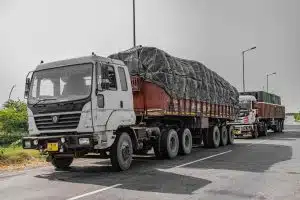
For example, if a driver has a preventable crash, the leasing company usually focuses first on fixing the vehicle and arranging a replacement. Driver coaching, corrective training, and safety reviews may not happen until days or even weeks later. This delay is common because bundled contracts don’t prioritize risk reduction.
Fleets with their own safety programs and clear accountability see real benefits. They have fewer repeat accidents, less vehicle downtime, and run more efficiently.
4 Benefits of Independent Fleet Safety Solutions
An independent fleet safety management offers a structured program that delivers multiple advantages for companies, drivers, and the overall fleet management process.
1. Faster Post-Incident Response
When an incident happens with a bundled leasing contract, the leasing company’s customer service team usually handles it first. This means the safety team is delayed, and driver coaching takes a back seat to repairs and logistics.
Independent third-party administrator (TPA) services for fleets eliminate that delay. Specialized providers like Fleet Response have dedicated teams ready to respond as soon as an incident is reported. This way, drivers get coaching right away, while the event is still fresh and emotions are heightened.
This timing is important. In the Light of Evolution: Volume VII: The Human Mental Machinery, a book on neuroscience, argues that strong emotions help people remember things better, suggesting that coaching drivers right after an incident is more effective and can help prevent future problems.
2. Stronger Accountability and Ownership
Specialized fleet risk management providers focus only on safety performance. They don’t sell vehicles or manage financing, so their sole priority is keeping fleets safe.
This clear focus creates accountability, with performance measured by safety outcomes such as incident rates, claim frequency, and compliance. This helps improve vendor performance and strengthens the organization’s safety ownership.
3. Better Data Visibility and Control
Fleet crashes caused thousands of dollars of loss for operators. As reported by the Federal Motor Carrier Safety Administration (FMCSA), in 2023, fleet incidents can cost from $49,398 for non-injury crashes to $15,230,414 for fatal crashes. These numbers make real-time risk tracking important for fleet operators.
The problem with bundled leasing contracts is that they often provide telematics data through the leasing company’s platform. As a result, fleets may face limited reporting, delayed updates, and little to no integration with their own risk management platforms.
Independent third-party fleet safety providers offer safety dashboards that you control. All your incident data, driver scores, coaching records, and claims history are in one place and work with your own reporting systems.
This data visibility enables real-time tracking, helping transform reactive fleet risk management into a proactive, data-driven strategy.
4. More Effective Corrective Driver Training
Generic driver safety programs delivered through leasing contracts tend to be templated and standardized. The same training module is applied across different driver populations, fleet types, and incident histories, making it less effective at correcting specific driving behaviors.
Behavior-based coaching programs, the kind offered through specialized safety providers, are built around individual driver data. For example, if a driver has a pattern of hard braking in a specific route environment, the coaching intervention addresses that behavior in that context.
This distinction matters financially. Fleets with comprehensive behavior-based coaching programs reduce major violations, improve driver performance scores, and save on insurance premiums.
The Need for Specialized Safety Providers
Unbundling fleet safety from leasing gives fleet operators more control over risk management and driver performance. Working with a specialized safety provider allows you to tap into expert-level risk management, ensuring strict regulatory compliance, reducing costs related to workplace injuries and lawsuits, and protecting your company’s bottom line.
Fleet Response operates as a dedicated, independent, risk-first partner with integrated capabilities that include claims management, safety program administration, and subrogation support.
Because Fleet Response is not tied to vehicle financing or leasing incentives, our safety programs are driven by risk reduction rather than asset management priorities. This makes it especially valuable for organizations with large or widely spread fleets that face frequent incident exposure.
Our model integrates safety program delivery directly with claims management and risk data, creating a continuous improvement loop that helps fleets achieve long-term risk cost reduction rather than short-term convenience.
Frequently Asked Questions (FAQ)
1. How do I know if my current leasing contract is limiting fleet safety performance?
Check if your leasing contract has a dedicated safety SLA with clear response times, behavior-based coaching, and real-time data access. If your safety program comes from the leasing provider’s general team rather than a dedicated safety group, it’s likely bundled and not designed for real risk reduction.
2. Will decoupling fleet safety from leasing increase operational costs?
An effective corrective driver training workflow connects incident reporting, driver risk data, and coaching assignment into a single automated sequence. It includes real-time FNOL capture, automated risk scoring, scenario-specific training modules, and performance monitoring after coaching is completed.
3. How does an independent fleet safety provider coordinate with a leasing company?
Independent fleet safety providers operate alongside leasing companies, not in conflict with them. Fleet Response manages safety program delivery, incident response, and claims coordination independently of the leasing arrangement.
Vehicle logistics and financing remain with the leasing company while safety accountability sits with a provider whose sole focus is risk reduction.
4. How does unbundling improve driver accountability?
Independent safety providers create clear accountability for driver performance by focusing only on safety. They track coaching records, incident history, and driver behavior through a team dedicated solely to improving safety outcomes.
With this focused approach, they provide more consistent coaching, keep better records, and ensure stronger compliance than safety programs that are just part of a leasing package.
5. Can small and mid-sized fleets benefit from standalone safety solutions?
Yes. Large or spread-out fleets with many incidents see the greatest impact from specialized risk management, but smaller fleets also benefit from clear accountability and behavior-based coaching. The right provider can adjust the program to fit your fleet size while keeping the same safety standards.
Make Fleet Safety a Priority, Not a Leasing Add-On
Specialized fleet safety vs. leasing bundles is not a question of cost. It is a question of organizational priorities. If safety is key to managing risk, you need a provider focused only on safety. Leasing companies are built for asset management, not safety, and mixing the two can create real gaps in performance and risk control.
Organizations that unbundle fleet safety from leasing get faster responses to incidents, clearer accountability, better data, more effective driver coaching, and lower long-term risk costs.
These advantages can be achieved through Fleet Response. Learn more about our safety solutions and what independent fleet safety management looks like in practice.