

16 Jun How Post-Incident Driver Coaching Prevents Secondary Collisions
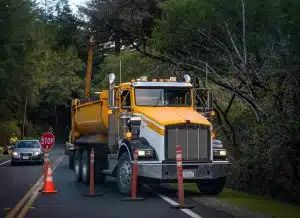
Most fleet safety discussions emphasize preventing initial accidents, but give less attention to the critical period after the incident. Many fleet companies might not realize how crucial this period is for preventing secondary collisions—that this is when the risk of a second road or vehicular accident becomes serious.
By implementing post-incident driver coaching, a structured, behavior-focused intervention is given to a driver after an accident or near-miss.
Understanding why timing is important and how integrated safety platforms can help give fleet managers the chance to respond quickly and help drivers build better habits on the road.
Why Secondary Collisions Are a Hidden but Costly Fleet Risk
Secondary collisions are incidents that occur as a result of an earlier accident, usually at or near the same place, often committed by the same driver. These incidents are more common than many realize, with the Department of Transportation reporting 15,488 verified secondary crashes across ten states.
Risk managers and safety officers are often aware of the initial incident within minutes, but secondary events rarely prompt the same urgent response. This gap can result in further vehicle damage, higher claims costs, driver injuries, and increased downtime.
The Problem with Traditional Corrective Driver Training Workflows
Most fleet organizations still rely on corrective driver training workflows built on manual processes and disconnected systems. After an incident, reports are passed down from claims and HR to safety teams via different platforms.
This often means:

- Training is delayed: Training assigned days or weeks after the incident reduces its effectiveness because drivers are less likely to remember the exact details of what happened and to recognize which of their behaviors need to change.
- Disconnected systems: Claims data and incident details are stored separately, which prevents valuable information from being used to create targeted corrective coaching.
- Lacks real-time visibility: Safety teams often lack real-time visibility, making it difficult to identify high-risk drivers who may need immediate support.
The issues are bigger than just missed coaching. When systems are not connected, repeat incidents may go unnoticed, insurance risks increase, and safety officers spend more time reacting than preventing problems.
What Is Post-Incident Driver Coaching and Why Timing Matters
Post-incident driver coaching is a targeted safety intervention that addresses a driver’s specific behavior, judgment errors, or situational responses immediately following a collision or reportable near-miss. It differs from standard driver training, which tends to be scheduled and periodic.
Chapter 9: Making Lasting Memories: Remembering the Significant of the neuroscience book titled In the Light of Evolution: Volume VII: The Human Mental Machinery, discusses how emotional arousal enhances memory storage. This is why immediate post-incident driver coaching is important. When a driver receives coaching while their emotions and memories from the accident are still fresh, the behavioral correction is more likely to take hold and persist.
How Integrated Accident Management and Safety Platforms Change the Game
The solution to disconnected workflows is not better spreadsheets or faster email chains.
It’s platform-level integration.
Integrated accident management and safety platforms unify incident reporting, claims management, driver data, risk scoring, and training triggers into a single workflow, without manual handoffs between teams.
When incident reporting links straight to safety actions, the time from accident to coaching goes from weeks to just hours. Fleet Response is designed with this in mind.
Fleet Response Visibility provides fleet managers with real-time access to incident data. The platform links First Notice of Loss (FNOL) submission, driver history, risk scoring, and automated training assignment, enabling a consistent and rapid corrective driver training workflow that supports immediate improvement in driver behavior.
How Post-Incident Driver Coaching Works to Prevent Secondary Collisions
Post-incident driver coaching uses a clear five-step process that starts as soon as an incident is reported. Here is how Fleet Response does it.
Step 1: Incident Is Reported in Real Time
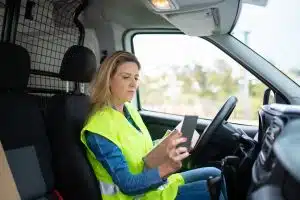
Using the Fleet Response Mobile app, drivers report incidents directly from the scene. The mobile tool captures incident details instantly. There is no paper form, no delay waiting for a supervisor, and no gap between the event and documentation.
Capturing and analyzing data in real time speeds up the claims process, cuts costs and downtime, and helps everyone get a faster resolution.
Step 2: Risk Is Automatically Assessed
Once the incident report is submitted, Fleet Response’s platform checks the driver’s history, past incidents, risk score, and the severity of the current event.
This automated risk assessment happens without any manual input from a claims or safety team. High-risk drivers are flagged immediately, and severity is scored objectively.
Step 3: Corrective Training Is Triggered
Based on the automated risk assessment, the platform assigns targeted coaching modules to the driver without requiring a human to initiate the process. The training is tailored to the specific incident type reported: rear-end collision, lane departure, backing incident, or distracted driving event.
Step 4: Driver Completes Targeted Coaching
The driver receives and completes the assigned coaching module, often the same day as the incident. This coaching module is defined by a specific, measurable, achievable, realistic, and time-bound framework, giving your drivers something concrete to work towards.
Step 5: Performance Is Tracked and Reinforced
Fleet Response treats coaching as an ongoing process. The platform monitors driver performance after intervention, tracks behavioral changes, and flags any regression.
Supervisors can keep track of how drivers perform after coaching. This feedback loop helps ensure coaching leads to real changes, not just completed modules.
How Immediate Coaching Reduces Costs and Liability
Every collision, injury, or preventable claim carries a measurable financial impact. Think of your fleet budget as a bucket. Every repeat incident pokes another hole, letting money leak out through repairs, legal fees, and high insurance premiums.

- Repairs: On average, fleets spend thousands per vehicle each year, and sometimes sooner, because aggressive driving and hard braking accelerate wear and tear on essential components.
- Legal fees: Traffic lawyer prices can range from $100 to over $1,000, depending on the severity of violations and the location where the incident occurs.
- High insurance premiums: Depending on claims frequency, severity, and exposure, annual insurance premiums can range from $45,000 for small fleets to $450,000 for large fleets.
By providing quick, integrated post-incident driver coaching, risk managers can help prevent these issues and track how this safety training affects claims trends. This makes it easier to measure the real value and return on investment of a targeted safety program.
Frequently Asked Questions (FAQ)
1. Can post-incident coaching reduce insurance costs?
Yes. When drivers receive coaching after an accident, they are less likely to repeat the same mistakes, helping reduce the number and cost of future claims. This can lead to cost savings for self-insured fleets and may also help traditionally insured fleets get better insurance terms.
Results can vary depending on fleet size, the types of incidents, and how consistently the coaching program is used.
2. What should be included in an effective corrective driver training workflow?
An effective corrective driver training workflow connects incident reporting, driver risk data, and coaching assignment into a single automated sequence. It includes real-time FNOL capture, automated risk scoring, scenario-specific training modules, and performance monitoring after coaching is completed.
3. Can this process be automated, or does it require manual follow-up?
With an integrated platform like Fleet Response, the core steps from incident report to coaching assignment are fully automated. This automation ensures consistency and speed regardless of staffing availability.
Manual follow-up is still valuable for escalated incidents or high-risk drivers, but the initial coaching trigger does not require a human to initiate the process.
4. Will immediate coaching reduce overall fleet costs and claims?
Yes. Due to repeated collisions being a primary driver of long-term claims costs, immediate coaching is essential to prevent secondary accidents, leading to reduced claims, lower severity totals, and reduced litigation exposure over time.
5. How can I measure the effectiveness of post-incident coaching?
Effectiveness can be measured through repeat incident rates for coached drivers versus a baseline, changes in individual driver risk scores, and overall claims frequency trends following program implementation.
Fleet Response’s platform provides ongoing performance-monitoring and visibility tools that enable safety officers to track coaching outcomes at the driver and fleet levels.
Don’t Wait for the Next Accident: Start Coaching Drivers Immediately
Secondary collisions can often be prevented, especially when post-incident driver coaching happens right after an incident. If training is delayed or relies on slow, manual steps, the chance to improve driver behavior is lost, and the risk of repeat incidents increases.
Fleet Response addresses this gap with an integrated safety solution that combines real-time FNOL, automated risk scoring, and immediate driver coaching workflows. This allows safety managers to respond more quickly, reinforce driver behavior, and reduce the likelihood of repeat incidents.
Explore Fleet Response Safety Solutions to see how a more connected approach to accident management can help protect your bottom line.