

01 Oct How DQ Management Enhances Overall Fleet Operations
In today’s logistics-driven world, fleet safety and compliance aren’t just checkboxes—they’re nonnegotiable. Every vehicle, every route, and every delivery relies on qualified drivers behind the wheel.
Managing driver qualification (DQ) files is a critical pillar of responsible fleet operations. Effective DQ management protects your business, reduces risk, and ensures your fleet operates with confidence and control every day.
In this article, we will explore how DQ management improves safety, strengthens compliance, and boosts efficiency across fleet operations, turning a regulatory requirement into a strategic advantage.
What Is DQ Management?
DQ management refers to organizing and maintaining driver qualification files as required by the Federal Motor Carrier Safety Administration (FMCSA) under the U.S. Department of Transportation.
These records verify that each driver meets federal safety and medical standards to operate a commercial vehicle legally. Typical documents include:
- Motor Vehicle Records (MVRs): A detailed history of a driver’s license status, violations, and suspensions.
- Medical Examiner Certificates: Proof that a driver is medically fit to operate a commercial vehicle.
- Employment History & Verification: Confirms past driving experience and checks for gaps or disqualifying patterns.
- Road Test Certificates & Evaluations: Demonstrates a driver’s ability to handle fleet equipment in real-world conditions safely.
It is essential to keep these documents accurate and up to date. They support your fleet compliance solutions and help prevent fines, service disruptions, and legal issues related to noncompliance.
How DQ Management Impacts Fleet Operations
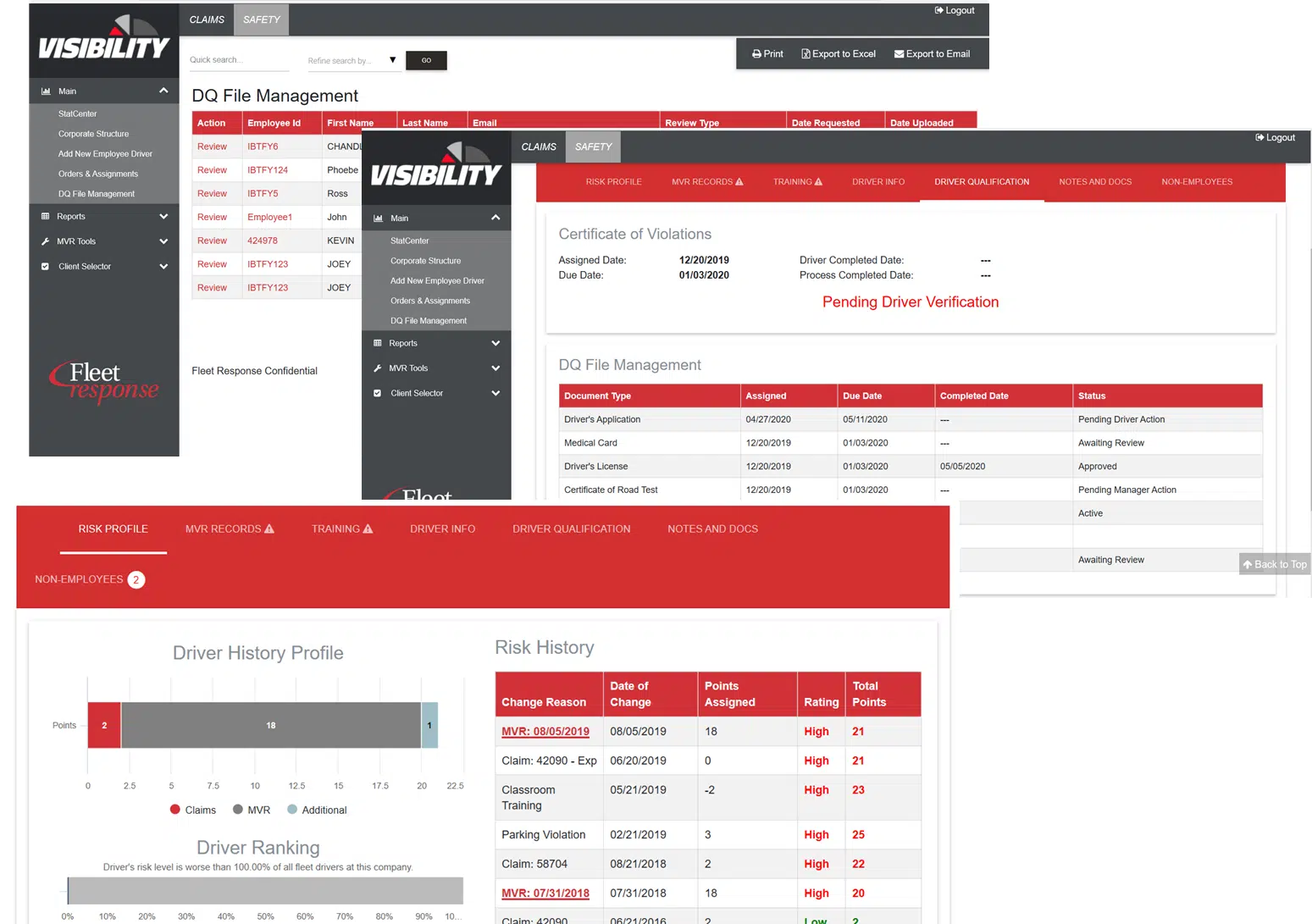
Driver qualification file management is the structured process of collecting, verifying, and maintaining essential driver records to ensure compliance with FMCSA standards.
Beyond paperwork, DQ management directly affects fleets’ day-to-day function. Let’s examine how strong DQ processes positively impact overall operations.
Boosts Safety Standards
Effective DQ management ensures that only properly licensed and medically qualified drivers are on the road, reducing accident risks and exposure to legal claims.
It fosters a culture of accountability with clear safety standards, allowing companies to trust that every driver meets regulatory and internal expectations.
Streamlines Compliance
Automated DQ systems notify managers before critical documents, such as medical certificates or MVRs, expire, helping to avoid last-minute issues and audit violations.
Maintaining current records ensures compliance with FMCSA regulations and reduces the risk of costly fines. It also makes it easier for fleets to meet deadlines, pass inspections, and document ongoing compliance.
Increases Operational Efficiency
Digital platforms reduce paper clutter and save time by providing instant access to driver files during audits or urgent decisions.
Centralized systems enhance reporting and planning, allowing fleets to track trends, reduce administrative tasks, and prepare better for audits or operational reviews.
Enhances Risk Management
A strong DQ process identifies early red flags, like repeated traffic violations or employment gaps, enabling proactive management of potential safety or compliance issues.
Clear and updated driver records aid investigations and insurance claims, expediting processes and strengthening your legal position.

Common Challenges with DQ File Management
Despite its importance, many fleets still struggle with DQ file management, especially those relying on manual processes. These outdated methods increase the risk of errors, delays, and non-compliance, putting operations and safety at risk.
- Manual paperwork and human error: Paper records can be misplaced or filled out incorrectly, leading to gaps in compliance documentation.
- Missed expiration dates or renewal deadlines: Outdated tracking removes drivers from duty due to expired certifications or licenses.
- Disorganization during audits: Scattered or incomplete files make it difficult to pass audits and can result in fines or operational delays.
- Lack of integration with other fleet management systems: Without connectivity, it’s harder to get a full view of compliance, safety, and performance across your fleet.
Why It Matters in Today’s Fleet Industry
Fleet operations today face mounting pressure to meet higher safety, compliance, and performance expectations. Investing in DQ management services is no longer optional—it’s a critical step toward staying competitive and audit-ready.
- Stricter Regulatory Oversight: Government agencies now require detailed, up-to-date driver records, and failure to comply can lead to costly fines or service disruptions.
- Driver Safety Transparency: There’s an increasing demand for clear, accessible driver histories that prove your commitment to safety and responsible operations.
- Customer Expectations: Clients now expect fast, on-time deliveries without compromising safety standards, pushing fleets to be efficient and compliant.
- Data-Driven Compliance: Fleets that leverage digital DQ tools and performance data gain an operational edge by reducing risk, improving trust, and delivering more reliably.
Takeaway
Effective DQ management isn’t just about paperwork; it’s about running a smarter, safer, and more compliant fleet. When your driver files are in order, everything else runs more smoothly.
By going digital, fleets reduce risk, stay ahead of audits, and improve daily operations. Fleet Response is a trusted partner in DQ file management, offering a comprehensive solution that streamlines the process and enhances it with state-of-the-art features and functionalities.
Contact us today to simplify your DQ process and strengthen your fleet from the inside out.