

08 Apr How Driver Scorecards Improve Fleet Safety Performance

Every safe, efficient fleet has one thing in common: managers who know how their drivers behave and perform on the road—with the help of driver scorecards.
Driver scorecards turn data into clear individual performance scores, highlighting who excels, who needs support, and where risks are building.
Understanding how driver scorecards work can help you improve your fleet safety performance. The right system can help you catch risky behaviors, personalize coaching for drivers, avoid accidents, and even reduce insurance claim costs.
What Are Driver Scorecards?
A driver scorecard is a data-driven tool that tracks and evaluates individual driver performance and behavior. It pulls data from telematics systems, GPS devices, and fleet management systems to measure:
- Safety behavior metrics: speeding, harsh braking, rapid acceleration, sharp cornering, and excessive idling.
- Compliance and risk indicators: seatbelt usage, hours-of-service adherence, distracted-driving events, and route compliance.
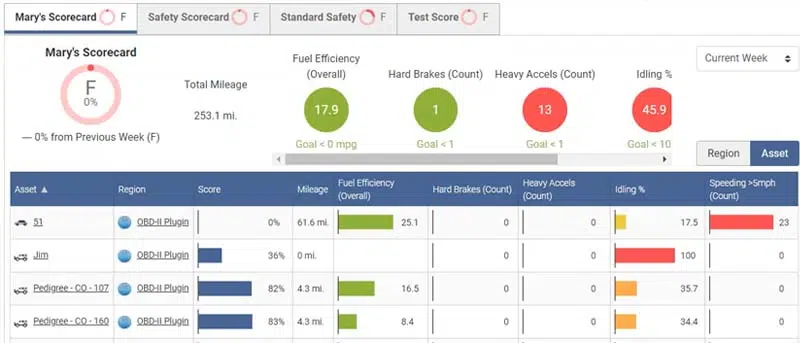
Each behavior is weighted into an overall score, providing managers a quick view of each performance and highlighting high performers or those in need of coaching.
Using scorecards also helps standardize expected driving behaviors. This practice fosters a culture of accountability and continuous improvement in the workplace.
How Driver Scorecards Work
Implementing a driver scorecard seems easy, but it goes beyond the numbers. Here’s how they work: each step connects to safer drivers and a stronger fleet.
1. Data Collection
It starts with telematics. Devices installed in each vehicle continuously capture driving behavior, including speed, braking force, acceleration, GPS location, and engine data, across every trip your drivers make.
Fleet safety performance metrics start here. The more consistent and complete the data, the more accurate the scorecard. Modern telematics systems track hundreds of data points per trip, providing detailed risk visibility across your fleet.
2. Driver Rating System
Once the data is collected, it’s scored. Each behavior is assigned a weight based on its risk level. For example, your scoring system might weight harsh braking more heavily than idling. The results are then aggregated into an individual driver rating.
This rating system allows you to rank drivers, identify outliers, and spot patterns across their fleet. It removes subjectivity from performance evaluation and gives every driver a fair and consistent goal to aim for.
3. Reporting and Dashboards
Fleet driver performance tracking becomes actionable through dashboards and automated reports. Individual scores, fleet-wide trends, and incident breakdowns are now all visible in one place. This way, you spend less time searching for data and more time acting on it.
Good reporting tools don’t just show you what happened; they help you prioritize where to act. Automated alerts flag high-risk drivers instantly, and trend reports reveal whether performance improves or declines over time, enabling corrective action.
Key Benefits of Driver Scorecards for Safety
The value of scorecards isn’t theoretical—it’s visible. It shows up in measurable outcomes across safety, costs, and driver performance.
Take this experience from a global engineering and construction company. They implemented a driver scorecard program to reduce accidents and liability. Within the first year, their average fleet safety score improved by 28%, accident rates dropped from over 5 to 3 per million miles, and the number of high-risk drivers fell by 87%. The results speak for themselves.
Identify Risky Driving Behaviors
Scorecards automatically flag risky behaviors like speeding, distracted driving, and aggressive maneuvering. This real-time data gives you early warning signals to act on before a risky pattern turns into an accident.
Reduce Crash Rates and Costs
Fewer risky behaviors lead to fewer accidents, lower claims costs, and better insurance terms. Driver scorecards based on telematics give insurers documented proof of safe operations, and over time, that track record translates into premium savings.
Improve Driver Coaching Programs
Generic training rarely changes behavior. Driver behavior analytics gives you the specific data you need to coach each driver on their actual habits. This personalized approach makes every session more focused, relevant, and effective.
Boost Accountability and Incentives
When drivers know their performance is tracked and scored, accountability becomes part of the daily routine. Pair that with a recognition program, and you reduce risky behaviours while reinforcing the culture you want to foster across your entire fleet.
Best Practices for Fleet Managers
To maximize the fleet’s driver scorecards, effective implementation and management are key to changing behavior rather than just collecting data. Here are some best practices fleet managers can apply when implementing driver scorecards:
- Set clear scoring goals by defining realistic, specific targets tied to safety and efficiency outcomes. Drivers perform better when they know exactly what they’re working toward.
- Communicate scorecard metrics to drivers to build trust. Introduce the scorecard program and explain its purpose to help them be more engaged and receptive to feedback.
- Integrate scorecards with training programs by using scorecard data to provide focused training. Address specific drivers’ behaviors identified by the data rather than offering the same sessions for everyone.
- Monitor trends, not just scores, because trends tell the real story. Check performance over time to see what works. Change your program if the data suggests it.
Final Thoughts
Driver scorecards are one of the most powerful and practical tools a fleet manager can use. When you communicate scorecard insights clearly and reinforce positive behavior, you build a safety culture that your fleet values.
Fleet Response can help you get there. Contact us today to learn how our driver performance tracking and safety solutions can help your fleet reduce risk, improve compliance, and lower operating costs.
Frequently Asked Questions
1. Are driver scorecards fair and accurate?
Yes, they apply the same criteria to every driver, removing bias from the equation. Most systems let you adjust scoring weights to fit your specific routes, vehicles, and operations.
2. How often should driver scorecards be reviewed?
Monthly works for most fleets and weekly for high-risk drivers. Consistency matters more than frequency. Regular reviews keep safety visible and coaching timely.
3. Can scorecards be customized for different types of vehicles or routes?
Yes. Good scorecard systems let you tailor criteria by vehicle class, route type, or job function. As such, a city delivery driver and a long-haul trucker face very different conditions; your scoring should reflect that.
4. How do scorecards integrate with fleet safety programs?
They serve as the data backbone. Scorecard insights feed directly into your coaching sessions, training decisions, and incentive programs. You can turn this data into a policy and make it a daily, measurable practice.
5. What are the most common behaviors flagged by scorecards?
Speeding, harsh braking, rapid acceleration, sharp cornering, and distracted driving are the most common behaviors flagged by the scorecards. These are the behaviors most closely linked to accidents.